

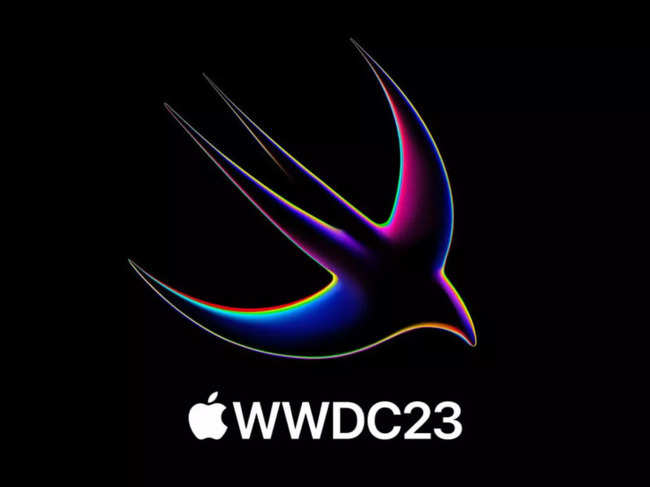
Apple sent their invitations to their World Wide Developer Conference 2026 with the Swift logo as the centerpiece of the design. Not a glowing Siri orb or an Apple Intelligence wordmark rendered in gradients, but the Swift logo, which is the logo for Apple’s programming language, the one developers use to write native macOS and iOS applications. Apple designs these invitations with the care of a theatrical company laying out a playbill, so the Swift logo as the anchor feels like it could be a signal about where their head is at going into what will be Tim Cook’s final keynote as CEO.
The broader expectations for WWDC aren’t exactly a secret. Apple is expected to deliver on the Apple Intelligence promises they’ve been making for a couple of years now, including a significantly smarter Siri, one with personal context awareness, on-screen understanding, and the ability to actually complete tasks rather than just announce them. Reports indicate the rebuilt Siri will run on Google’s Gemini technology, routed through Apple’s Private Cloud Compute infrastructure.
What I actually want to see, and what I have zero reason to expect, is something that takes the Swift logo on the invitation seriously.
Anyone who has spent time adjacent to web development over the last couple of years has watched tools like Bolt and Lovable do something genuinely exciting: you describe what you want in plain language, and the tool builds a web application, an actual, functional application, with logic and data and behavior. The apps are imperfect, generally unsecure, require plenty of iteration before they become useful, and real developers will always build better software than what those tools can produce for casual users. But the tools work well enough for someone who has never written a line of code to go from an idea to a working application in a couple of hours.
Unfortunately, those tools just produce web apps.
Which is why I’d love to see announced at the WWDC a new Apple application where a non-developer can describe what they need and receive back a native macOS app, Swift-based, built on Apple’s own frameworks.
The catch (and this is actually makes the idea viable rather than threatening to developers) is that any app created this way would be shareable only within an iCloud Family. The user couldn’t upload their custom app to the App Store for sale. The code couldn’t be signed by Apple’s Developer Program for distribution on the open internet. The only people who can use it on their devices are the people in your household.
Consider what that constraint does to the incentive structure.
Professional developers would still have every reason to build something polished enough to make a general audience willing to pay for it. The custom apps for households would be idiosyncratic: a chore tracker that works exactly the way my family thinks about chores, a recipe manager built around how my family actually cooks, a dashboard that shows the information cared about by that my family (how many times I took the dog out vs. how many times my kiddo did). They’d all be apps that only make sense for one household, and they’d be highly limited to what amateurs were capable of imagining. Try as they might, nobody would have the patience or the skills to replace Fantastical.
The Swift logo on that invitation does not mean what I’m imagining. It’s a developer conference, and Apple developers use Swift. They’ve put the logo on invites in years past and it hasn’t meant the app I suggested above.
And yes, there is a third-party app that does this for a price.
Still.
If Apple is serious about what AI is actually for, which is expanding what ordinary people can do with their computers, then the right move is Apple-native software generation for private use.
Discover more from Fluid Imagination
Subscribe to get the latest posts sent to your email.